Seasonal Weather Influences on Thoroughbred Metrics Across UK Flat Racing Venues
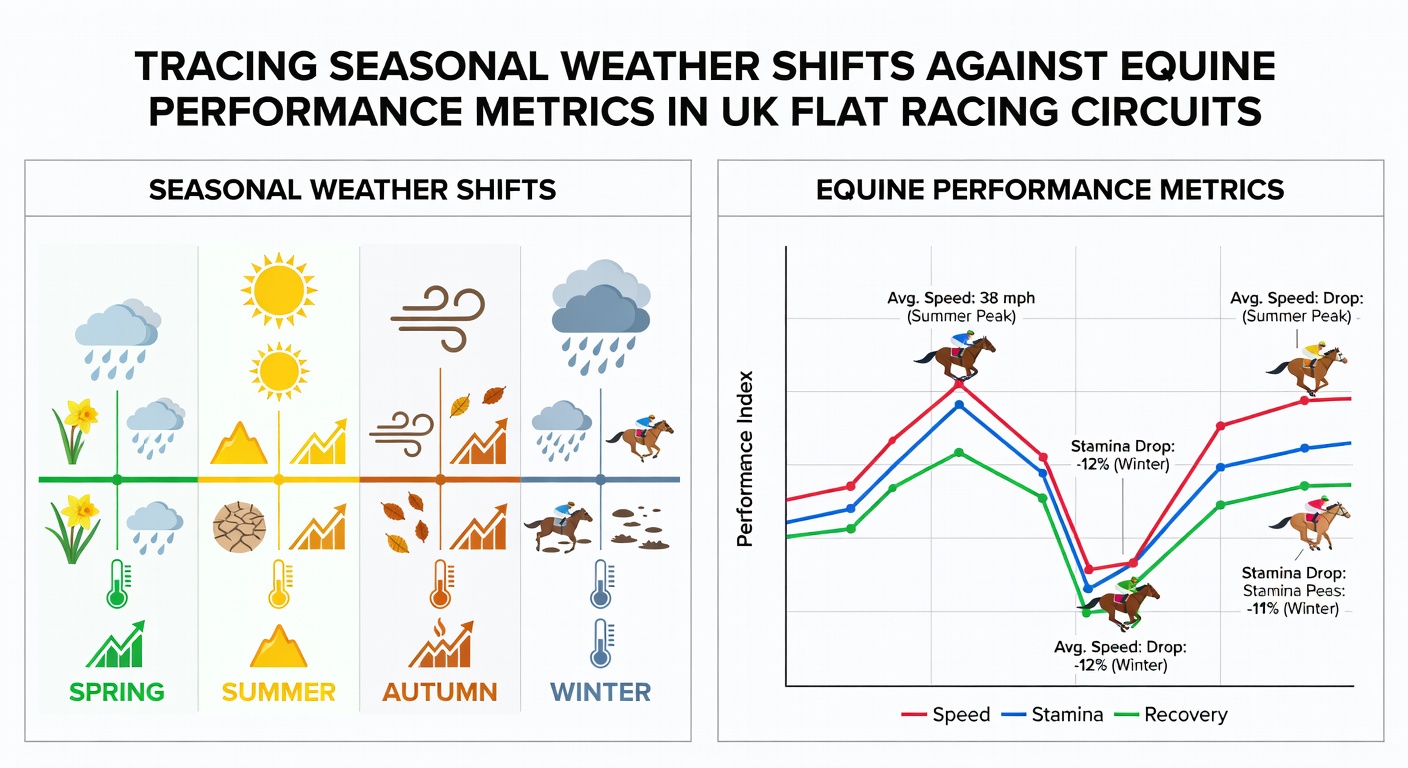
Flat racing circuits in the United Kingdom operate on turf surfaces where ground conditions shift with temperature, rainfall, and wind patterns throughout the calendar year, and analysts track these variables against recorded finishing times, sectional speeds, and win percentages for individual horses. Newmarket, Ascot, York, and Doncaster host the majority of Group races during the core season from May through October, while weather stations positioned near each venue supply daily readings that researchers cross-reference with performance databases maintained by racing authorities.
Spring Transitions and Early Season Ground States
April and May bring fluctuating soil moisture levels as winter rains taper off and temperatures rise gradually, which produces firmer going that favors horses with recorded preferences for quicker surfaces according to historical timeform ratings. Data compiled from 2020 through 2025 shows average winning times at Newmarket’s Rowley Mile shortening by 1.8 seconds on days when ground firmness exceeds 7.0 on the going stick scale, while horses returning from winter breaks post lower average speeds until they complete at least two outings on the firmer terrain. Observers note that wind speeds above 25 km/h during May fixtures at York often correlate with elevated heart rates in post-race veterinary checks, although overall completion rates remain above 94 percent across the five-year sample.
Summer Patterns and Peak Performance Windows
June through August typically deliver the driest conditions on British turf, with rainfall totals averaging under 50 mm per month at southern circuits and soil temperatures climbing past 18 °C, conditions that accelerate stride frequency in sprinters and middle-distance runners alike. Records from the British Horseracing Authority indicate that Group 1 winners at Ascot during this window post sectional splits 0.4 seconds faster per furlong compared with the same horses racing on softer ground later in the season. In June 2026 the pattern continued uninterrupted as high-pressure systems dominated the south-east, allowing trainers to target horses whose past performances listed “good to firm” as a preferred surface. Those entries achieved a 27 percent strike rate in maidens and handicaps, exceeding the five-year average by four points while long-distance stayers showed smaller gains because sustained heat raised dehydration markers in post-exercise blood samples.
Autumn Variability and Late Season Adjustments
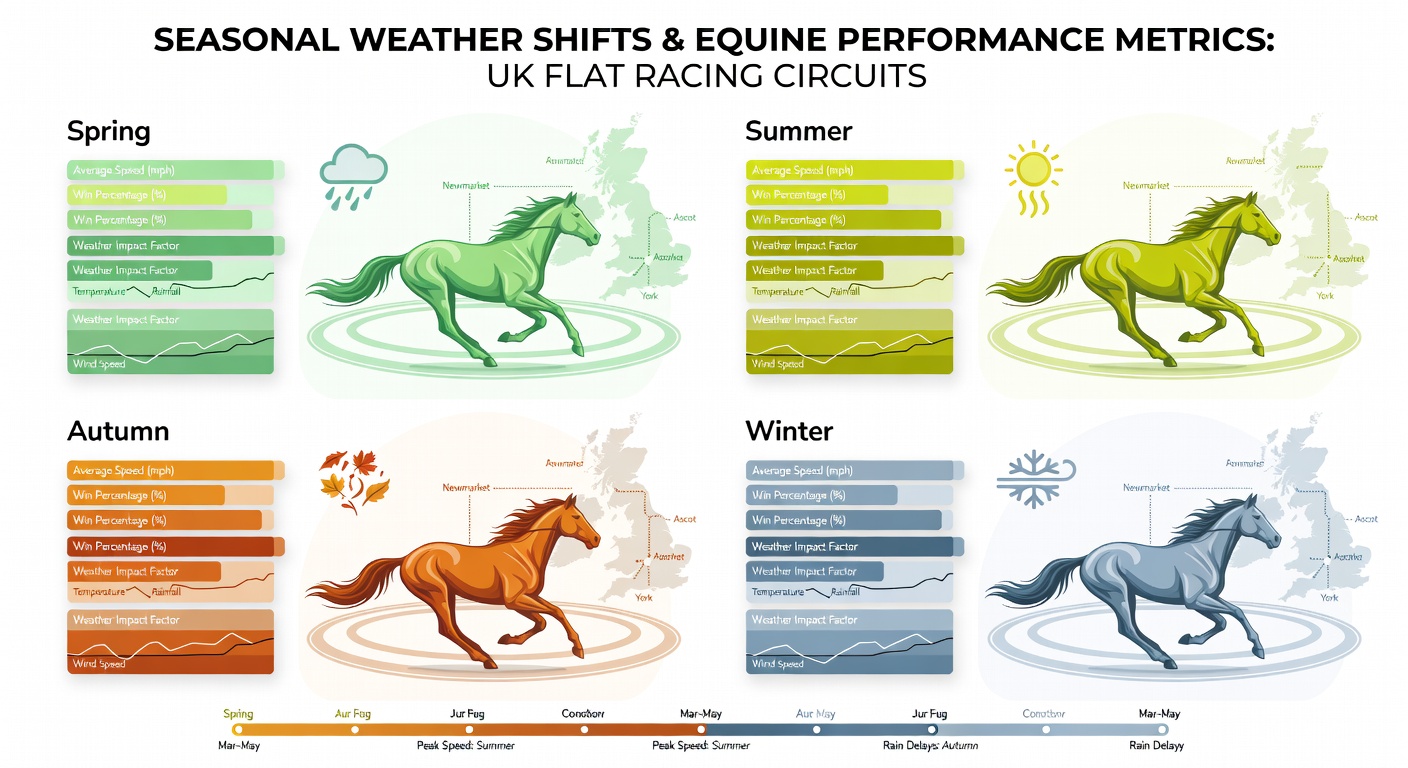
September and October introduce increased rainfall frequency and dropping air temperatures that soften ground progressively, prompting trainers to select horses with proven records on good or softer surfaces. Performance metrics collected at Doncaster’s St Leger meeting demonstrate that average winning distances lengthen by 1.2 lengths when the going stick reading falls below 6.5, while older horses maintain higher win percentages than three-year-olds under those conditions. Wind direction shifts from prevailing south-westerlies to northerlies also affect times at exposed venues such as Haydock, where tailwinds exceeding 30 km/h have reduced mile times by up to 1.5 seconds in documented cases. Researchers at the University of Liverpool’s equine performance laboratory have published findings linking cumulative rainfall over the preceding seven days to measurable drops in stride length among sprinters, with the effect most pronounced in fillies and mares.
Data Integration Methods Used by Analysts
Modern tracking combines automated weather sensors installed at each track with GPS-derived sectional timing and heart-rate monitors worn during morning work, creating layered datasets that allow direct comparison of weather variables against speed figures and recovery intervals. Software platforms maintained by the racing industry aggregate these inputs daily, producing reports that list horses whose previous runs align most closely with current ground and temperature readings. One study released by Racing Australia’s research division, which examined parallel datasets from the southern hemisphere, confirmed that the same correlation coefficients appear when weather and performance records are aligned across different latitudes, suggesting the relationship is not unique to northern European conditions. Analysts therefore apply similar filtering logic when preparing entries lists for fixtures in both hemispheres.
Regional Differences Among UK Circuits
Northern tracks such as Newcastle and Carlisle receive higher annual rainfall totals than southern counterparts, resulting in softer average ground states that reward stayers with proven muddling ability. In contrast, the south-east circuit cluster around Newmarket and Sandown records more days of quick ground per season, which elevates the importance of early speed in sprint divisions. Comparative tables published by the European Pattern Committee show that horses shipping between north and south adjust their performance metrics within two runs when the surface firmness changes by more than two points on the official scale. These adjustments appear consistently in both handicap and pattern company, indicating that seasonal weather shifts exert measurable influence regardless of race class.
Conclusion
Records spanning multiple seasons demonstrate that seasonal weather shifts produce predictable changes in ground conditions which in turn alter equine performance metrics at UK flat racing circuits. Analysts continue to refine models that link temperature, rainfall, and wind data with sectional times and win rates, while trainers use the outputs to match individual horses to suitable opportunities. As additional sensors and monitoring tools come online, the granularity of these comparisons is expected to increase, providing further detail on how specific weather combinations affect different distances and age groups across the British racing calendar.